Every science writer, when taking on the arduous task of untangling the tortuous early history of their chosen field from the prevailing religious and philosophical ideologies of their eras, goes about it in a unique way. Some extend their purview into the prehistories, teasing out science from every little piece of stone, bone fragment and ruin, extending our range of understanding ever further into the veiled and mysterious avenues of the past. Others write in grand and meticulous detail of the rolling and undulating rival philosophies which sparked the uprising of natural philosophy, which was the name of what is now called physics. And others, still, emphasize the noble and sometimes herculean mental and spiritual gymnastics of the greatest thinkers, who embroiled in personal and cultural religious oppression, found ways to reconcile their discoveries of the universe with Holy Writ and their own personal spirituality. Some grandiose thinkers manage, in one way or another, to cover it all.
No matter how one goes about it, I always stand in awe at anyone who even attempts to do so. There is just so much information, there is so much to consider. My respect goes out to anyone who has ever attempted to pen even a basic history of science. That said, it goes without saying that some do a much better job than others.
I am currently grinding through To Explain the World by Steven Weinberg. A Nobel Prize in physics means you know a thing or two about the physical world, it doesn’t necessarily mean you know how to write about it, and that said, I make no attempt to objectively review this book. It just isn’t my cup of tea. It was very hard for me to get in to, and it really doesn’t get interesting until more than half way through when Galileo discovers the moons of Jupiter upending the Catholics Geocentric (Earth-Centric) view that everything in the universe orbits the Earth. Galileo is said to have muttered under his breath, in reference to the gaining heliocentric model “and yet, it moves” after the inquisition forced him to recant his assertion that the Earth moves around the Sun and not the other way around.
All of that said, I am eagerly awaiting this to arrive at my doorstep.
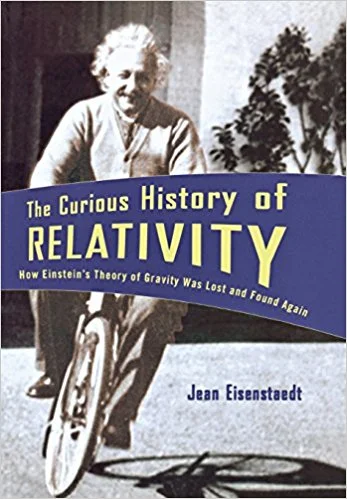
It's in honor of the total solar eclipse happening in a few short days. It was, after all, one of the most incredible stories to ever have happened. Yes, you read that right. I didn’t specify that it was the most incredible story within science. I said "ever" meaning that it is one of the most incredible stories to have ever happened.
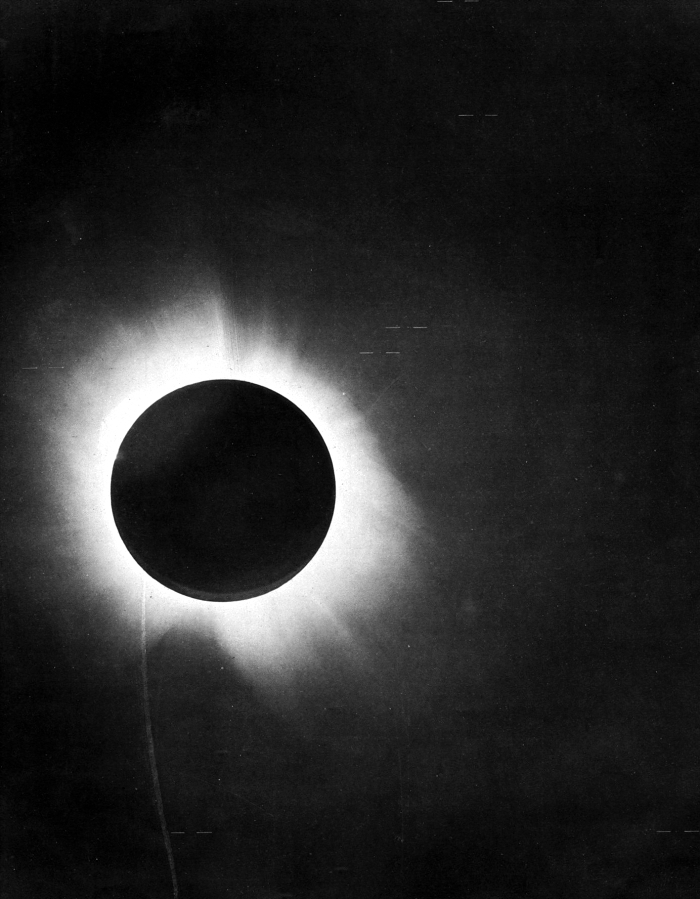
Do you ever find yourself using GPS to find an address? You can thank relativity. Know why Gold is the color that it is and not silver-ish? Relativity. Magnets? Forget about it. And the list goes on. Special and General Relativity directly contribute to so many things in our lives, and we don’t even realize it, and it is all thanks to the incredible mind of Albert Einstein. The very first way that relativity was tested was by observing light from distant stars warping around the total solar eclipse of 1919. In short, Einstein’s theory predicted that light would warp around massive bodies. The astronomer Sir Arthur Eddington took this photo (below) of the eclipse, and with further scrutiny of it, was able to observe stars on the edge of the eclipse that should have been totally obscured by the sun. But there they were. Eddington confirmed that light was, indeed, warping around the sun, proving Einstein correct, and subsequently rocketing him into the league of historical BAMFs!
He upended physics as classical thought conceived it and not only flipped science on its head, he changed the world entirely, and the 1919 total solar eclipse helped to make it so. So, even though most everyone isn’t going to have the astrophotography skills to observe the effects of relativity during this coming total eclipse, anyone who observes it will be witnessing history, specifically the history of relativity. In a sense you will be witnessing the gravitational lensing of light itself, because even though the naked eye won’t pick it up, gravitationally lensed light from otherwise obscured stars will be hitting your eyes. This is why I am so excited for it. If you can’t make it to the areas where totality will occur, most all of the United States will see nearly ninety percent totality, so, pretty much anywhere you are just make sure to look up on the morning of Monday, the 21st of August. Salem Oregon, will be the first to see it, starting around 9am, and it will cross the Country ending in Charleston, South Carolina around 3pm.
Oh, and don’t forget safety glasses. From what I understand libraries, schools, and science museums are offering eclipse glasses, among many other sources. You can get them for mere dollars or even for free some places. If you do anything though, make sure they are specifically made for eclipse viewing and are certified to be safe. Here is a link to a Forbes article explaining How to safely view the Solar Eclipse. Eye sun safety is paramount. Unfortunately it’s unavoidable that there will a percentage of viewers who try to view it without any glasses or use faulty or ineffective means to view it and take damage to the eyes. Under any circumstances don’t look at the sun without safety glasses made for the occasion. In the brief moments of totality (the moments that the moon is completely obscuring the sun) you can take your glasses off and look at the eclipse with the naked eye, but not before or after.
To all my lovers out there, keep looking up, be safe, and keep loving, and make an attempt to see the eclipse this coming Monday. It will be incredible.