This has been sitting in my worddoc. folder for awhile. It is difficult to begin to explain what it’s about. Really, I just started writing, coming back to it, leaving it, and returning time and time again. This went on, I’d say, for nearly six months. I’d add things, change things, and, there was no real destination in mind with what I wanted to convey. It just went where the whims of months of aloof pondering took it. Then, when I saw something forming, I attempted to fill in the gaps to make it more precise in coherent thought. It might be the result of thinking too broadly about existence, or of wrestling with the ever present past so predominantly responsible for my current present. Since I started this at the beginning of the year, it goes without saying that I started writing it before Chris Cornell's passing, and, given the feel and the nature of where this thing was already heading, I felt a certain cosmic nudge to integrate a little something about him into this document, this document that I can't really define.
What is this about? It is, for all intents and purposes nothing other than what goes on in my mind at any given time all compiled into one document. There is death, there is love, ecstatic bliss, visions of glory, God, language, science, philosophy, angst, pain, literature, metaphor, fiction and non-fiction, and there is life. Attempts to bring all this and more together, I think is what every human being is, whether consciously or not, tasked with doing to one degree or another. It seems that we all find some balance in our lives, some way of reconciling all of these things. It’s the only way we go on. Some of us do a better job than others, yet I could never say as to whom is failing or passing. Tears, sorrow, oddities in personalities brought on by one trauma or another, mournings, loving, hurting, acting out, all carry with them causes of which I cannot know, only of myself, and even then, of myself, I may not even remember what those lingering things even were that carry on in my personality from day to day from their very inception. Beginning at a point before the traces of memory in my mind can ever exert enough energy to impress upon my conscious awareness where they wholly originated, they continue on, forever.
I have longed to be able to explain my situation to another individual and have failed time and time again, making the axehead broken off in the foundations of my soul seemingly irreconcilable. Perhaps, what this document is, is an attempt to share what I feel might be unsharable, the reasons why I am the way I am.
Update: In the moments before posting this I found out that Chester Bennington, frontman and singer for Linkin Park has passed away. It is difficult to write that he committed suicide. This is nothing ever easy to write about. It always makes one wonder what can drive someone to take away their own life. It isn’t a secret that for years of my life I struggled with these very question of myself. I didn’t have the eyes of the entire world upon me, only a few whom I loved, and whom loved me in one way or another, to one degree or another, and the pain of these few eyes in reflection of why I was hurting so badly was nearly unbearable. I can’t image how heavy the weight must be to someone like Chester Bennington who's made a living influencing an entire planet.
We love our artists, we love our musicians. Often times we hear their words and in some small but significant way we hear part of ourselves in their lyrics. And often times they inspire us, strengthen us, because we know that we’re not the only one’s feeling these things. And when they find the strength and creative resolve to paint a picture that so thoroughly resinates with ourselves, it creates incredible bonds. So it is that these bonds are strained to the point of breaking our hearts when something like this happens. His fans assuredly are heartbroken, but to those who knew him personally, there aren't words to describe.
Let us not romanticize or endear this sort of act, but let us also not condemn in self righteousness, as if we could possibly know all things that culminated into Bennington taking away his life. Only God can weigh his soul and ours and take into consideration all things. It is sad. But we can still honer his life and his ability to inspire countless hosts of people all over the world.
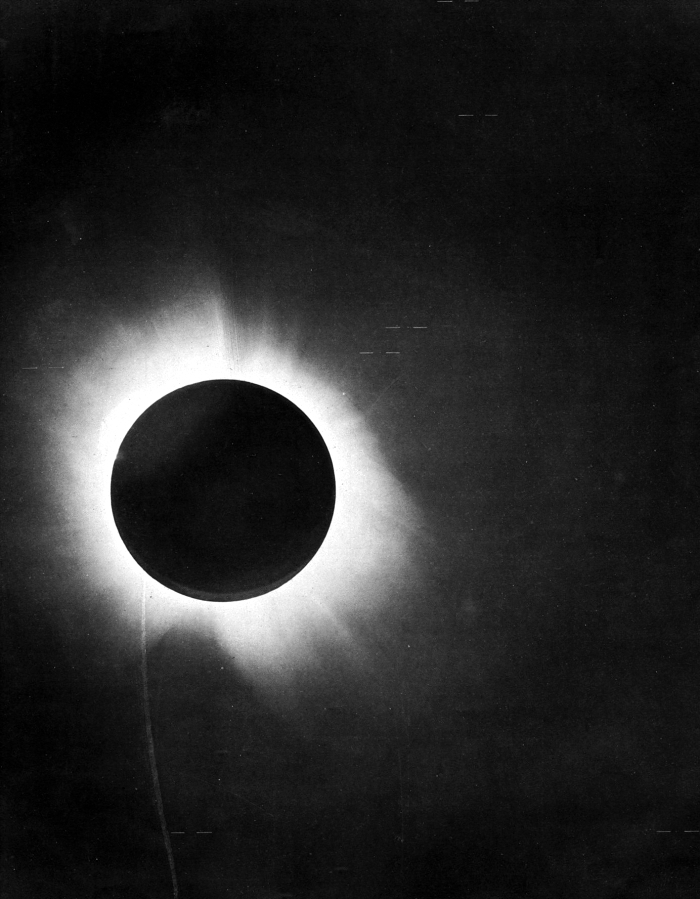
Also, before I get to the main post, and this is a little off topic, but I just want everyone who is reading this to take off August 21 from work. A total solar eclipse will cross the continental United States that day. I will most likely be traveling to Boise, Idaho to see it. This is an experience I won’t be missing and I don’t think anyone should. It will be incredible.
https://www.space.com/33797-total-solar-eclipse-2017-guide.html
Without further ado,
Like a Stone
Men of broader intellect know that there is no sharp distinction betwixt the real and the unreal; that all things appear as they do only by virtue of the delicate individual physical and mental media through which we are made conscious of them; but the prosaic materialism of the majority condemns as madness the flashes of super-sight which penetrate the common veil of obvious empiricism.
-Lovecraft’s The Tomb
A Day in March:
It was a day in March. I think, the 22nd, 2019. It was then that I saw the most beautiful woman I’d ever seen. It didn’t matter that she was only a dream, or perhaps a waking vision, I can’t be sure. Either way she was as real to me as anything could be. To this day I find myself taken aback in awful wonder as to her features, her soft cheeks, slender arms and penetrating dark eyes. Was it someone I knew? Or perhaps, will know? Or was she merely an emblem pressed upon my lasting awareness by some merciful creature working beyond the veil? Or peradventure she was merely stirred into existence by some primeval mechanism concealed under innumerable strata of evolutionary neurology, which, scouring the depths of my soul in some ugly and calculated manner, simply commanded, as a line of code might, my evaporating spirit back into the temporal domain, as that is the effect she had on me. Emblazoned in my mind, whether she was a real person, an angel, a goddess, or a symbol such as one the artist brings into existence stirring the splendrous in every awestruck creature that beholds it, she gave me an earnest view of love, and one in which has caused me to weep in paradoxical commiseration for all those who’ve gone without the sight of such heartbreakingly orphic beauty in their lives.
Though astonishing in form, her appearance, to my understanding, represented something much more than any mere physical attraction, it was more than any lust could offer the carnal senses. Her frame embodied an august grace wrapped within a delicate flowing and white dress, and I, windswept upon the desolate plain of the inconsolable fettered to my limited and dumbstruck imagination found my eternal and aching soul, yes, growing in her presence, specifically in confidence, if ever so minutely to act thenceforward from the very pews of that sacred hall in which I sat, in such a way that fathomless beauty inspires one to do. Even if it was but a line of code somewhere wrought upon the echelons of my consciousness that brought forth the vision thus, the underlying implications of such an experience offer up to its witness endless shores for the curious to frolic, but also a deep inscrutable concern and longing faith of and in the prodigious nature of where it came and what it means for not only my own existence but of all that is and of all whom roam these worlds, both terrestrial and etherial alike. She instilled in me an immovable desire to continue to exist, even in what I reckoned to be an ugly world, even so, wracked by the pains of otherworldly ignominy, and share with the inhabitants of this place the meaning, as I took it to be, of true love. She bade me live and encircled me about in sparkling rings of endless wonder. And I have tried to live, but the truth of this thing has emptied my soul in attempts to understand the breadth of its meaning.
From the areas lower than what has been conceived by the common man, I was taken to the hight of ecstatic bliss. A depth more profoundly striking than I’d ever considered possible amplified ever sense, and, with red eyes I sat before an alter which held the emblems of the son of an omniscient and omnipotent deity, and as I partook in solemn remembrance with a few whispered words “what should I do?” piercing through from another sphere and riding upon the shifting and ranging sounds of ringing echoing through the spaces in my head came, “Be as Christ.” I stayed for the remainder and then left the chapel before Sunday-school in search of a friend who wasn’t there.
…
There is so much I’d like to write. But I find myself often dredging through a murky depression which constricts in its surprising grip my ability to convey what I’d like to. Only an infinitesimal fraction of what is largely concerning to me represents itself in the form of language, or rather verbal or written communication between two or more individuals. When the scope of this thing rests upon my struggling mind, this is wherein a frustration larger than life weighs upon me.
How, for instance, is it possible for one to string together a series of arbitrary symbols to convey a series of true physical phenomena? Mathematics aside, this is particularly troublesome, when, yes, we do our best to give objective definitions to words, everyone views each word through a different subjective lens. This ultimately leads to droves of unintended and sometimes unfortunate miscommunication between people. It is even exacerbated when one realizes that there is really no objectivity in language whatsoever, in fact it is forever changing, growing and receding as the tides, and it is only if you happen to already be completely saturated by the ephemeral paradigm of your culture can you comprehend the most part of it—it being the part of the whole of this thing that is currently what surrounds us.
Every word is subject to change not only in meaning but in style and appearance and pronunciation. That’s not mentioning the complexities of double meanings, sarcasm, nuance, innuendo, and words used in different tones and or along with certain gestures or body movements. Yes, we can trace the etymology of any given word and understand what it used to mean at any given time but there is no telling where the evolution of language will go next, what any one word might morph into in more than one dimension. There are only groups of people who are so closely knit together by cultural norms for long enough periods of time which allow them to agree close enough on what words mean to be able to live somewhat effectively together. There is a part of me that finds this uncertainty wildly exciting, giving the adept linguists reams of information to study and the poets an endless medium to express themselves, but then there is another side of me which finds it excruciatingly vexing. It is the side of me which makes me wonder if it is in that inability to convey serious matters of the deeper self that is at least partially responsible for any number of mental illnesses—and that, perhaps the mentally ill might be struggling with matters which are truly incomprehensible to the “prosaic materialism of the majority.”
Whenever I have a miscommunication with someone, rather than getting more frustrated and barring other factors, often times I am taken into wide eyed curiosity as to what it was exactly that was received erroneously, only to find that another’s life experience has painted a different picture of what certain words or string of words mean in any given context. And often I’ve found that this fascination unintentionally disassociates the original problem from my present situation which, then, gets me into more trouble because, rather than attempting to rectify the original miscommunication I go in on a long and probably incoherent spiel about the origin of the miscommunication that originally hindered our conversation. The vexing part is that there seems to be no end in sight as to understand the origins and ultimate construct of language in general, especially when you find yourself constrained by the demands of the moment, namely the person staring with furrowed brow at you on the other end of the table. I must conclude that all of this murky uncertainty that spews forth from our lips are merely our guttural attempts to explain to another what is immediately apparent to our internal selves and to our internal selves alone. It seems as though that the innocent enough miscommunication in a conversation over the dinner table is inextricably linked to the very origins of life itself in the unimaginable first recesses of our ancient origins, yea, the very beginnings of the need for a separate entity to convey merely one bit of information to another, for purposes much more basic than those of the layered and intricate broadway plays continually acting out in our heads. It’s impossible to fathom the origins, yet if we accepted this fathomless nature of it instead of getting bent out of shape over someone’s differing perspective of the world around them, perhaps there'd be less angry assaults on one another and more enlightenment. And who can’t use a little more enlightenment?
The depths of this rabbit hole recede endlessly into the spooky worlds of deep consciousness. Where words begin to form, not in an already formed soup of flourishing language, but in the minds of the creatures who first began to use them, there seems to be a mysterious sensation that surges through the mind. Taken into context alongside with the origins of life, the need for separate entities to convey information one with another for differing purposes, differing regions' evolutions of sounds conveyed through a physical medium where body language in conjunction with noises produced in other fashions that have evolved differently over countless millennia based on infinite circumstance and nuance one begins to lose themselves in attempts to comprehend what it is all about. And this isn’t even considering how language evolves. To give just an extremely limited example of how language evolves in our modern world, I’ll offer up the word “book” which apparently now can mean “cool” as in “dude, that trick was so book!” The serendipitous way in which this evolution has occurred delights my soul, for it was the replacement word in the predictive text of the t9 mobile phones for the word “cool.” And as such, “book” has, in certain circles come to be used in, perhaps a comical way, to mean “cool.” But I am totally alright with that and have, upon realizing that this has occurred, thoroughly incorporated the word and its new meaning into my vocabulary, even if it has already, in its ephemeral nature come and gone from the current trend of modern lingo. Evolution in general, but in particularly the evolution of language is so friggen’ book!
To give a minute illustration of how complex this communication thing is I’ll share this example; I was listening to someone read a story about the ancient Greeks, and in the story the author wrote that the characters were nodding in agreement. As soon as I heard this, I no longer was capable of following the storyline because I found myself wholly engrossed in the question as to whether the Greeks actually nodded to represent a mutual agreement, or to denote the meaning of “yes.” Turns out it’s not that simple. Although most cultures around the world nod up and down in a couple rapid motions to indicate a positive reaction, such as “yes” or to agree with another individual or group, the Greeks, I found, nod upward to indicate “no” and downward and to the left (or right) to indicate “yes”. It’s hard to understand why this is the case. One theory, which comes to us from Darwin’s The Expression of the Emotions in Man and Animals, as to why most cultures around the world nod for “yes” and shake their head for “no” is that most cultures around the world breastfeed their young, and it is the most natural thing to do for an infant to move their head from side to side (shaking their head) when they no longer want to suckle and move their head up and or downward to suckle. Who knows if this is the real reason why we nod prevalently for yes and shake our heads for no (doesn’t explain the Greeks!) But suffice it to say that there are infinitesimally subtle causes to why we say the words we do and react the way we do, and they are inextricably linked to the very earliest fathoms of the genesis of life. And this is the rabbit hole. It’s biology and by extension culture that has evolved for one odd reason or another that we act in any mannerisms that we do at all. You nod to signify that you agree, you smile to convey happiness—but, why? Everything we do is rooted in infinite inscrutableness, and we don’t even think of it (albeit we probably have more pressing matters to spend our energy on.)
It is vexing. No other word for it. I often find relief and certain solace in reflection on the sometimes seemingly ludicrous assertions of ancient Chinese philosophy, in particular a section of, Laozi’s Tao Te Ching. “The Tao that can be expressed is not the Eternal Tao; The name that can be named is not the Eternal name. The unnameable is the eternally real.” The mere fact that someone else seems to have understood the powerlessness of words to define what is actually real brings my heart some relief. If you look a little deeper at this sentiment, you might start to recognize that Laozi might have been trying to convey the reality that what we experience from one moment to another is truly, in its sublunary reality in fact inexhaustibly incredible, so much so that words cannot truly describe even the most mundane of physical phenomena, let alone the splendid, or say, the Tao. You can imagine how silly I felt Googling “What is the tao?”
Another curious consequence of language is that we liken exterior things to other inward things to try to explain our situation to others in hopes of soliciting some sort of sympathy or in ultimate hopes, I presume, of retaining a sort of cosmic affinity with those we feel inherently connected to without words. Yet it is the intrinsic connection which is what means something in the first place which is the mechanism which draws creatures together without the need for words, but it is then the job of transmitting information to attempt to explain why the connection is there at all, and this is where we can run into confusion, but also a certain ironic beauty. “Shall I compare thee to a summers day?” We all know the Shakespearean line well, nearly permanently ingrained in our minds. We all know how pleasant a day like that is, sitting outside on the grass, maybe a gentle refreshing breeze blows by. And yet, why should conjuring this image be better than merely stating that “you are pleasant to be around.” I think it must be that there are qualities in a summers day which transcend the mortal tongues ability to convey, and by conjuring that image through the medium of words instead of using a word whose definition suggests the same thing we solicit the pure emotion of it in which words meant to define that feeling cannot convey in and of themselves, otherwise stating “you are pleasant to be around” would make you feel just as grand. Its merely nature, but for some reason it stimulates a certain innate bliss in our natural selves when evoked in the mind, which unavoidably we, in our quest to define the world around us create and attach a word to, but then again, invariably that word will never stimulate the sort of understanding we have by describing or likening outward circumstances to parallel our inward feelings. It is also another curious oddity as to why certain scenes in nature solicit a natural high. What is it with the sunsets, or the picturesque grand mountain landscapes? There is a theory as to why those things conjure grand feelings in us, but I’ve not the time to address them here. I hope I haven’t lost anyone. Let me break this down.
There are feelings: happy, sad, angry, excitement.
There are words that describe feelings which are those respectively plus some; happy, sad, angry, excited, wonderful, and pleasant.
Then there are things that we see and associated words that describe those things that we see: a summers day, stars, flowers, stones, water, houses, etc…
We can tell someone “you make me happy.” Which often conjures jovial feelings on both sides (the communicator and the receiving party). But then when we want to be unique, romantic, or invoke a more profound sensation in our receiver-of-information, we tend to say something like “you make me happy as a summers day, or you are beautiful as a rose”. A summers day is not intrinsically happy, but it is a commonly shared pleasant experience and we use that word to enliven the word “happy.” The arbitrary symbols and guttural groans that mean nothing, ordered in a certain way that we understand to represent an event that we’ve experienced which is wonderful, somehow conjures that wonder in us much more than arbitrary symbols that mean nothing strung together in a way that we understand to merely be the definition of wonder.
Humans cannot conjure in and of ourselves the words to describe with complete accuracy the things we experience because the things we experience are just that, an experience immediately pressed upon our consciousness while the words used to describe those experiences are after the fact and a mere representation/interpretation of the pure experience, hence Loazi’s “the name that can be named is not the eternal name.” Using words to describe something is second hand by nature. So in order to more fully help explain our experiences we invariably, and perhaps, unconsciously are driven to use analogy, metaphors and similes to conjure closer feelings in which we hope to share more effectively. Even though a stone is merely a stone, without needing to give an explicit droll and detailed account of how I am, I can merely relate my feelings to that of a stone. Not to say that a stone literally has feelings, but immediately an image is conjured up in ones mind which resinates more thoroughly the true meaning of how I feel, and simultaneously offers a deeper outlook when we take into consideration what the author of any book, verse, or lyric might be trying to say when we realize that the stone may not merely mean a grey, timeless, sturdy, perhaps stoic rock lodged in a hillside somewhere anthropomorphizing it, but also, perhaps, a stone in which is etched upon with dolorously profound lyrics that stand planted above our returning bodies—that of a headstone.
In the new context which we see at different times riding upon the waves of our internal selves we find ourselves stunned in retrospect at what we might call genius, whether Shakespeare or Cornell, that we invent a means to communicate our feelings one to another, but constantly find ourselves subverting the very words we invented to describe our emotions by using those words to revert back to nature as evidenced by our immense use of metaphor from where we came and will return to convey our most dearest feelings. We are always likening one thing to another to better convey what we mean. Is this not the strangest thing? It is interesting why it should be this way if the thing we mean isn’t actually more closely related to what we are likening it to than the word we assigned to that thing originally. It raises the question, then, if conjuring an image of a summers day more fully exemplifies what we are trying to convey to the person we are comparing it to, then why should we liken it to that person and not merely equate it with that person? You say “you are pleasant” meaning you are equal to pleasant, yet when we want to evoke a more accurate emotion we say “you are ‘like’ a summers day”. If we equate pleasant with what your receiver-of-information is, yet remain consistent in suggesting that a summers day evokes a more true reflection of your feelings, then why should we merely liken it instead of equating it with our receiver-of-info? Basically, why don’t we say “you are a summers day” like how we say “you are pleasant” instead of saying “you are ‘like’ a summers day” or “shall I compare thee to a summers day?”? And then the paradox ensues. We say you are like a summers day to convey a more accurate response to our feelings, but we intuitively know that a person isn’t actually a summers day, but they are actually pleasant, even if the word “pleasant” doesn’t do your feelings justice. After discussing this oddity of language with a few people, I’ve discovered a few exceptions to this likening paradox. Names: Summer, and Rose, are both examples of names given to people. When a parent names a child one of these names along with many others, they are essentially equating their child with the sentiment of that thing. I haven’t attempted to compile a comprehensive list of other things that we equate with instead of likening to, but it’s come to my attention that we do say things like, “you’re a breath of fresh air.” This is a direct equalization and not a likening. I’m sure there are other examples of this but I haven’t the time to scour the dictionary of idioms, phrases and sayings. I think, to those I love, I’m going to start saying “You are a summers day.”
Continually comparing things to other things in hopes to better describe what we mean certainly says something about our nature, and our lives, and even our deaths. What it does say, though, might be somewhat difficult to ascertain. In attempting to understand the world around us in a logical linear way we constantly find ourselves running into paradoxes, walls, and things that just don’t make sense. I mean, a person is not literally a rose, or a breath of fresh air, or a summers day, yet we compare them to these things to illustrate a truer reflection of what we mean or feel. This is only one thing that appears to be problematic but remains true, we do do these things—we do make these analogies and these comparisons. And there is more, much more. None of what we have to do to live in this world is very intuitive, and perhaps that is why we are so drawn to the starry skies and vivid sunsets and tender flowers. Those things, when just experienced first hand, not in trying to explain them, give rise to a pure bliss and fill us with wonder, and if but only for a moment, those indescribable things in which for some reason we find intrinsic beauty, we are swept away from the vexing reality encroaching in upon our being from all angles and dimensions, namely the wild animals waiting to eat you and or the impending call from your boss at work waiting for you to show up and do your job. It’s only if you wish to stay alive that you must resist the temptation to get lost in the intrinsic beauty of the fiery sunset all before you on the horizon. It’s when we, driven by numerous megennium of evolutionary processes are compelled to stay alive that we are inclined to invent countless counterintuitive mechanisms, formulas and protocols to better retain our livelihoods and that of our clan. As the saying goes “necessity is the mother of invention.” If you want to stay alive (a necessary thing) you better not stare too long at that flower otherwise you might die from starvation, and here, learn this new method of fastening this stone to this wooden handle so you can more thoroughly capture prey to fill your stomach—and then learn this new mathematics so we can more successfully build buildings and send satellites into orbit so we can make our lives more comfortable! All the while we are chasing a beautiful dream, but it isn’t the dream itself we want, it is to be in the dream for as long as possible. Otherwise why should we not, in one moment look into the eyes of a loved one, or get swept away by the immense pleasure of the wondrous sunset in one moment and let our bodies die then and their in that moment of ecstasy? We peruse counterintuitive things to extend our lives so as to be able to experience pleasure for longer. Yet sometimes what we have to do to stay alive and pay the bills waters down our moments of intrinsic beauty so much that we get depressed and find it hard to see a reason to go on. Yet, many find a reason to go on, to keep drudging through every day, day in and day out, and often times the reason why we subject ourselves to immense hardship is nothing other than the happiness of someone else e,g, true love.
These realities, bill pay, debt, and other techniques to better one’s livelihood are not exactly an intrinsic part of our makeup, this is why so many have a hard time learning them and living by them, take, for example mathematics. Our brains aren’t hardwired to do math. Yes, I know some are more adept at learning mathematics than others, but in general this is why so many people struggle and fight through math class. This is not all to suggest that learning isn’t a worthy endeavor, I am merely saying that these things are not what we instinctively desire. To share a personal want, I do have a very deeply rooted desire to learn and to educate myself, but there is a fact that I cannot deny, and that is that it takes a lot of energy, uncomfortableness, discipline, and hard work, sometimes to the point of utter exhaustion and tears. I could easily spend the time going to school on other more immediately gratifying experiences and save money for other things, however I know this will benefit me in the long run. I won’t get into the problems of higher education at this time. There are many, but that is for a later day.
All of that said, the things we, as a human populace do to survive and thrive in this world undermine so thoroughly our innate desires that we often times throw our hands in the air baffled, continuing our lives without acknowledging these oddities, sometimes so thoroughly that we forget how immensely rich even our mundane lives actually are. But I will not encroach any further upon the secrets of this mystery which we are all vividly aware of but never speak of, perhaps, not because it is secret, but because we don’t know how to speak of it. Perhaps the reason, as explained by the 19-20th century philosopher of language, Ludwig Wittgenstein, that it is so hard to answer the question of what my purpose is in life, is because we are bound by the construct of language to describe it. We try to use words to answer questions which cannot be answered in word. Wittgenstein said “the truth shows itself, it is not said or even expressed in thought. What can be said can be said clearly, whereof what one can not speak one must remain silent.” Wittgenstein thought that to ask the question “what is my purpose” along with other deeply philosophical inquiries remained wholly absurd to ask, as one could never use language to answer them. This train of thought rendered nearly all of the previous philosophers treatises and struggles to attempt to understand the world around them nearly an exercise in futility. Although, he did think you could find the purpose in your life, but it remained a solely experiential phenomenon, one in which one must remain silent of.
And in that silence, that reflection on my self in agonizing restraints to convey my thoughts to a curious and impatient world, I often find, as I’ve already touched on, a creeping urge welling up in me to seek refuge in the mountains, as maybe a cure, a cure for the common life. Perhaps it is a deep underlying nature within our human scope to silently condemn all that we’ve done with our evolved intelligence in and to this world in which we live and embrace the ever more wondrous creations of Mother Earth of here and now in this very moment, and of which we came. In word and in culture it’s as if in the unseen world, home to the muse who graces my every thought gently pressing me to write, to feel, to think, we are all communicating, if not in word, in actions transcending both space and time, in our silence, in our groans, in our glances, in our absences, and in mannerisms which transcend the logical mammalian brain which keep us connected, albeit on levels rarely seen with the eye, and gleamed sometimes only in the occasional dream or vision. It’s as if paradoxes are no thing at all when it is merely a paradox to the outward shell, but to the inner apparent.
Of a truth, there are cosmic affinities that transcend deeply entrenched cultural norms. And these things do war one with the other upon the pockmarked battlefield of our souls. The stoutest among us walk on in longing sobriety with heavy hearts and restrained tongues, for the extents of what is possible to experience in life supersede by all rights what can be translated into word for “that which cannot be spoken, one must remain silent.” It is only that infinite God who weighs every tear against the backdrop of our circumstances that our battle is known. But whom greater is there to know our travails, and then again whom greater is there to face these dark and trying times than ourselves, those who’s chests shine with light and who's faces beam in similarity of that infinite and Eternal Omniscient deity, the creator of all things, even the most High God of the Universe and Father of our souls, our Father who art in Heaven.